How do great leaders actually win?
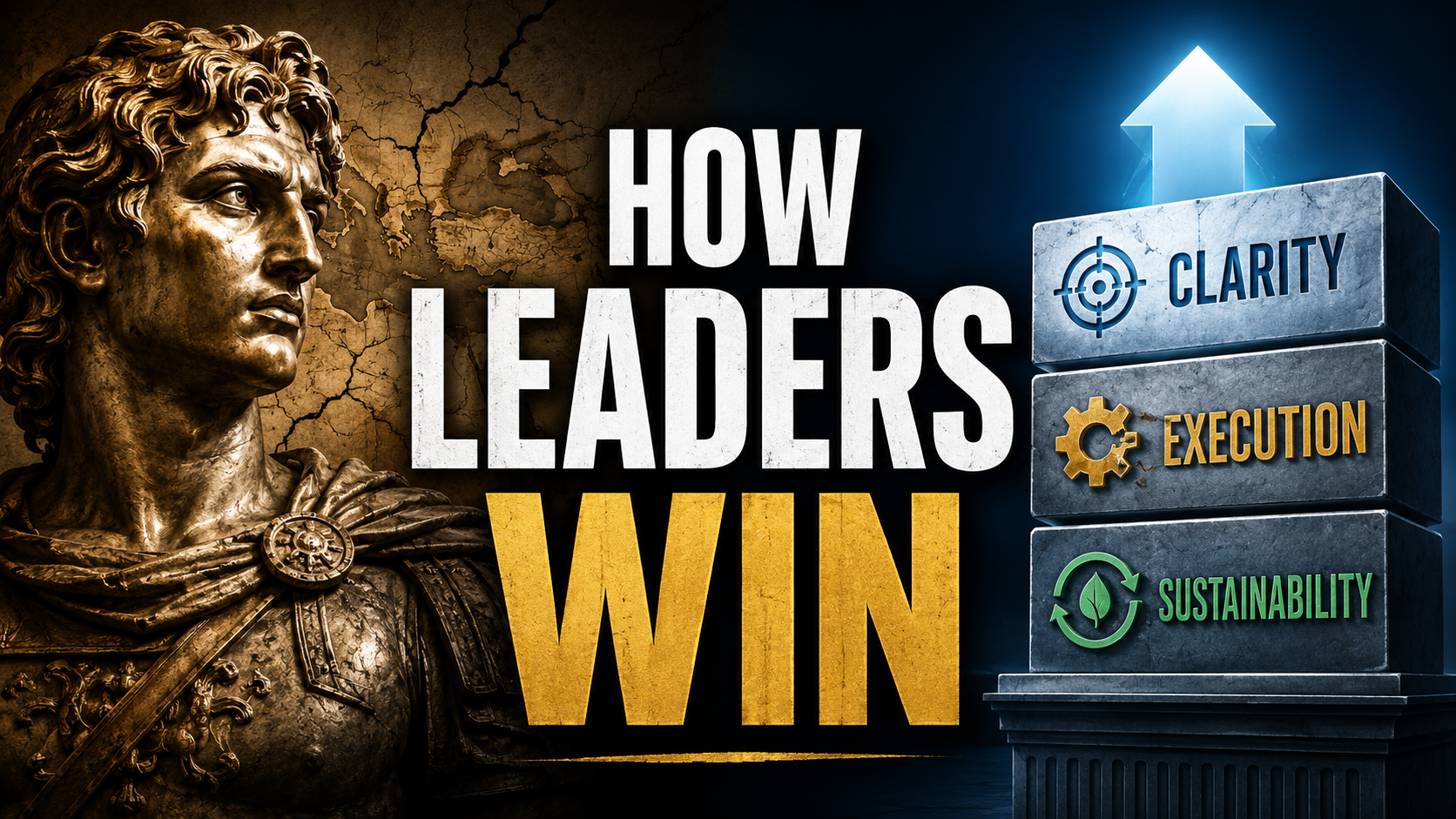
In this episode of Tales of Abundance, Randy Lorensen and Dr. John Oberg break down a practical leadership framework built around three essential pillars: clarity, execution, and sustainability. Using the rise and collapse of Alexander the Great’s empire as the opening case study, they explore a hard truth most leaders miss: it is not enough to build something powerful if it cannot survive without you.
The conversation starts with the difference between having a vision and building a system that outlasts one person. From there, Randy and John unpack what clarity really means inside an organization—core values that are actually lived, aligned outcomes, and clear direction. They then move into execution, including evaluation, alignment, delegation, and contribution, and explain why many leaders think they are strong executors while still creating confusion, misalignment, or costly blind spots.
The final section focuses on sustainability, which may be the most overlooked part of leadership. They discuss culture, communication, planning, and development, and why sustainability is usually the hardest leadership muscle to build because it is important but rarely feels urgent. Along the way, they connect the framework to modern AI workflows, arguing that the leadership principles do not change in an automated world—they just become even more important.
In the Abundance Briefing, the episode shifts to breakthrough science and abundance trends: a remarkable Alzheimer’s case involving psilocybin, more stories from the SpaceX IPO and the employees who became millionaires, and a new abundance index showing that access to key resources has improved dramatically over time.
If you lead a team, run a business, manage people, or want to become a stronger leader in a world changing fast, this episode gives you a practical framework you can actually use.
Show Notes
00:00 – Alexander the Great, Babylon, and the leadership lesson from a collapsing empire
01:57 – The three-part leadership framework: clarity, execution, and sustainability
03:01 – Why the order matters
03:37 – Why sustainability is often the hardest part of leadership
04:47 – Why founders and entrepreneurs often neglect succession and long-term structure
06:14 – What clarity should look like in a strong organization
06:57 – Core values: real values vs aspirational values
07:35 – Randy on defining company values the hard way
09:19 – Why fake core values do more damage than no values at all
09:30 – Outcomes, direction, and what clarity actually requires
11:57 – Where clarity goes wrong inside organizations
12:45 – The accounting example: solving for taxes instead of the business
13:28 – Functional silos and why departments often optimize for the wrong thing
14:38 – Execution: the four parts most leaders miss
14:49 – Evaluation, alignment, delegation, and contribution
18:03 – Why most leaders think they execute well
19:35 – Where execution fails in the real world
20:03 – A chief revenue officer example of bad evaluation and bad resourcing
21:14 – Delegation failures, onboarding gaps, and bad assumptions
22:37 – Sustainability: where Alexander the Great failed
23:05 – Why sustainability is important but rarely urgent
23:28 – Culture, communication, planning, and development
24:24 – Tim Cook, Steve Jobs, and the challenge of long-term sustainability
25:33 – Elon Musk, one-of-one founders, and the sustainability question
27:58 – What leadership looks like in the age of AI
30:47 – How AI changes execution without changing leadership fundamentals
33:28 – Randy on how AI has forced him to become more precise
37:17 – What AI can teach leaders about clarity and communication
40:13 – The practical self-assessment leaders should start with today
41:52 – Why adding clarity and sustainability can make good leaders much better
Abundance Briefing
42:34 – Psilocybin and the Alzheimer’s case that shocked researchers
44:56 – Dr. John on causality, clinical caution, and health autonomy
47:24 – Why psychedelic science is getting serious attention
48:33 – More SpaceX IPO stories: welders, interns, and workers becoming millionaires
50:38 – Paper wealth, lockups, and what value creation really means
51:10 – The Simon Abundance Index and what it says about progress since 1980
52:47 – Why abundance has grown, and why the story still gets distorted
55:00 – Propaganda, perception, and understanding what is actually improving
Links Mentioned
Dr. John Oberg’s leadership framework
Randy’s Hermes/AI Context Stack